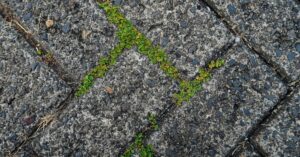


A beautiful paver patio or driveway can transform your outdoor space, but weeds that sprout between the joints can quickly spoil its appearance. Those stubborn little plants have a talent for appearing in the most inconvenient places, even across a carefully maintained landscape. Fortunately, you don’t have to surrender your outdoor surfaces to unwanted vegetation. There are several practical ways to protect your pavers from weeds without excessive maintenance or expensive repairs. Explore these ways to prevent weeds between traditional pavers.
1. Use Polymeric Sand To Fill Paver Joints
One of the most effective ways to discourage weed growth is to fill the spaces between traditional pavers with polymeric sand. Unlike regular joint sand, this specialized material contains additives that help it harden after exposure to water. Once cured, it creates a firmer barrier that limits the space available for weeds to establish roots.
Polymeric sand also helps reduce joint erosion from rain and routine surface maintenance. For homeowners with patios or walkways that experience frequent foot traffic, this added stability can be particularly beneficial. Just remember that the product must be compatible with your pavers, and proper application is necessary to avoid residue or surface discoloration.
2. Keep Your Paver Surface Clean
Leaves, grass clippings, and other organic debris may seem harmless, but they create favorable conditions for weeds. As these materials decompose, they can collect inside paver joints and provide a place for airborne seeds to germinate. A clean surface offers fewer opportunities for unwanted plants to take hold.
Make a habit of sweeping your patio, driveway, or walkway with a stiff-bristle broom. Pay particular attention to corners, shaded areas, and spaces near garden beds, where debris tends to accumulate. A leaf blower can also help clear dry material from larger paved surfaces without disturbing the joint sand.
3. Remove Weeds Before They Develop Deep Roots
Even a well-maintained patio can occasionally develop a few weeds, especially after periods of warm, wet weather. The trick is to address these small intruders before their roots become established. Young weeds are generally easier to remove and less likely to disturb the surrounding joint material.
Use a narrow weeder or specialized paver joint tool to extract plants from the spaces between individual units. Try to remove the entire root rather than snap off the visible stem, since some weeds can regrow from material left beneath the surface. Afterward, inspect the joint and replenish any displaced sand with a compatible product.
For larger patios, divide the surface into manageable sections and inspect one area at a time. A brief inspection every couple of weeks during the warmer months can help prevent a few scattered weeds from becoming a widespread nuisance. It’s much easier to remove five small plants than tackle an entire patio full of mature vegetation.
4. Improve Drainage Around Your Pavers
Excess moisture can create favorable conditions for weeds, particularly in areas where soil and organic debris accumulate. If water remains on your patio long after a storm, the problem may extend beyond ordinary surface maintenance. Poor drainage can contribute to joint erosion, surface movement, and other issues that affect your hardscape.
Check for low spots, clogged drainage outlets, or landscape beds that direct excess water toward the paved area. A qualified hardscape contractor can evaluate the surface slope and recommend appropriate corrections if necessary. Addressing drainage problems can help preserve the paver system and reduce conditions that encourage unwanted vegetation.

5. Maintain a Clean Border Around Your Pavers
Weeds don’t always begin their journey between the pavers themselves. Sometimes, they spread from nearby lawns, flower beds, or neglected landscape borders. Without a defined separation, aggressive grasses and other plants can gradually creep into the outer joints of your patio or walkway.
Create a neat boundary between paved surfaces and adjacent landscape areas with appropriate edging materials. A properly installed edge restraint also helps maintain the alignment of the pavers and supports the stability of the surface. For a decorative touch, consider a contrasting paver border that complements your home’s exterior.
Regular lawn maintenance can further reduce the chance of invasive vegetation reaching your hardscape. Trim grass near patio edges and remove weeds from adjacent flower beds before they produce seeds. These efforts help maintain a polished transition between your paved areas and the rest of your landscape.
6. Consider a Suitable Weed Control Treatment
Sometimes, manual weed removal isn’t enough, especially if your patio already has persistent vegetation throughout its joints. A targeted weed control product may help address stubborn growth and reduce the need for repeated hand removal. The right approach depends on the type of weed, nearby plants, and the materials used in your hardscape.
Choose a product labeled for the intended application and confirm its compatibility with concrete pavers. Follow the manufacturer’s instructions, particularly around ornamental plants, pets, and areas that drain toward waterways. Avoid homemade salt or vinegar mixtures, since they can damage nearby vegetation and may affect certain hardscape materials.
7. Repair Damaged or Empty Paver Joints
Over time, rain, foot traffic, and routine maintenance can cause joint sand to disappear from certain areas. These gaps provide space for dirt, seeds, and organic debris to accumulate. As the joints deteriorate, weeds may find more opportunities to establish themselves.
Inspect your patio periodically for recessed joints, loose pavers, or areas where the joint material has washed away. Refill the affected spaces with a compatible sand product according to the manufacturer’s instructions. If the pavers have shifted or developed uneven gaps, consult a hardscape professional before attempting more extensive repairs. Pay particular attention to joints near stairs, driveway edges, and heavily traveled walkways. These locations can experience greater stress than quieter portions of your outdoor space.

8. Establish a Seasonal Paver Maintenance Routine
Consistent care is one of the best ways to prevent weeds between traditional pavers. Instead of waiting until unwanted plants cover your patio, create a seasonal routine that addresses debris, joint condition, and nearby vegetation. A few scheduled maintenance sessions throughout the year can help your hardscape retain its attractive appearance.
During spring, inspect the joints and remove any weeds that appeared during the cooler months. Summer calls for regular debris removal and attention to grass that may spread toward patio edges. In fall, clear fallen leaves before they decompose, and use winter to assess any drainage or surface issues that deserve attention before the next season.
Weed prevention doesn’t require constant attention, but it does benefit from a thoughtful maintenance routine. With these habits in place, you’ll spend less time dealing with unwanted vegetation and more time enjoying your outdoor space. Equip yourself with high-quality concrete patio pavers today and use the techniques above to maintain a cleaner setup.